03 Lumo
Sustainable Mycelium Lamp
Project Information
Timeline
April - July 2024
Project Type
Sustainable Material Exploration
Contributors
Florian Meyer
Delong Xiao
Applied Competencies
Creative Direction
Concept Generation 
Experimenting 
3d Development 
Prototyping 
AI Exploration 
Initial question
How can light create atmosphere through material and how can form be connected with the materiality?
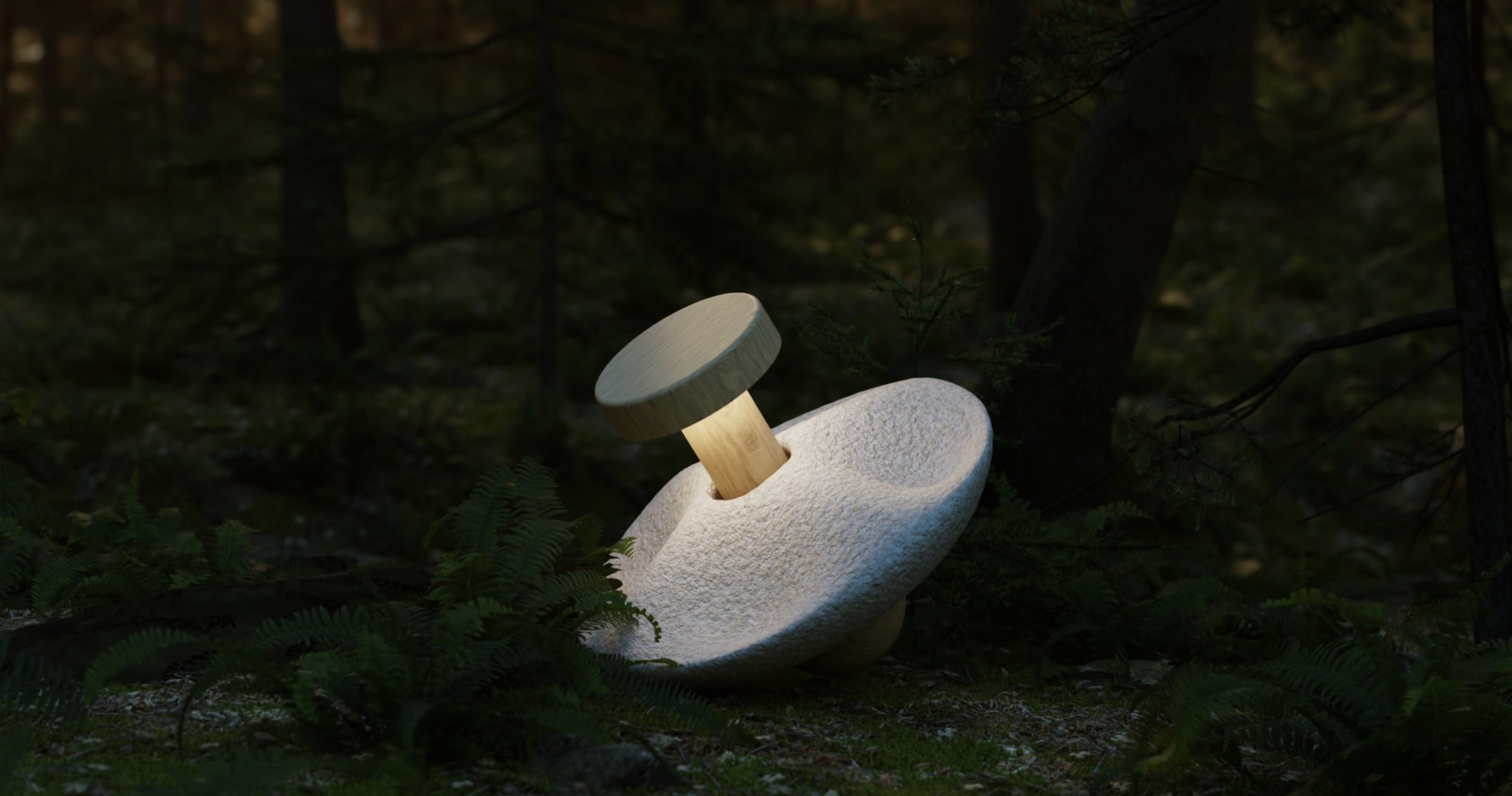
With Lumo we explored the relationship between light, material, and perception. The starting point was the idea of using mycelium not just as a sustainable material, but as a central design element that shapes both form and atmosphere. Instead of designing a fixed object, we focused on creating a system that allows subtle adjustments and interaction to create a desired atmosphere. 
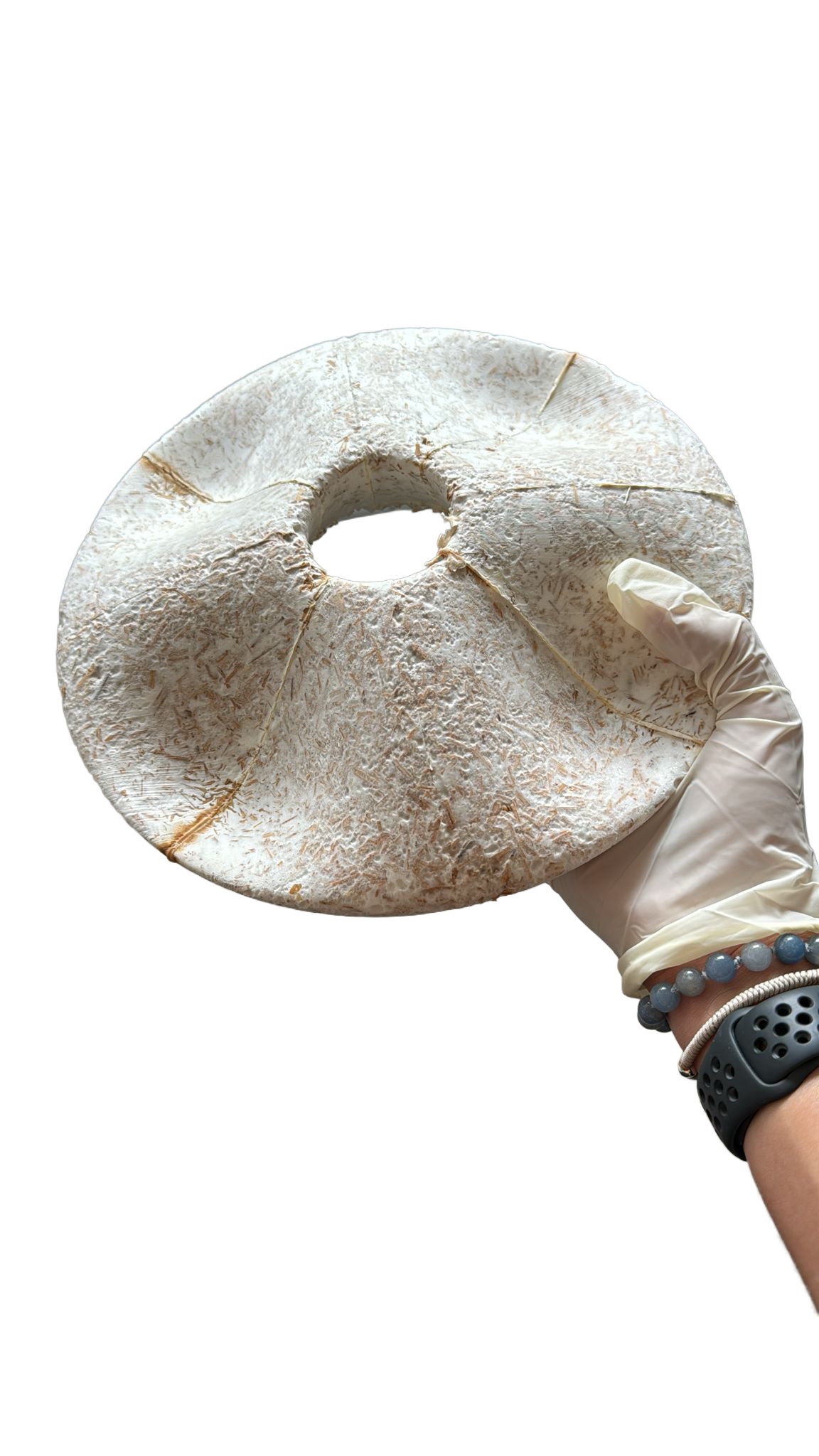
Mycelium presents a sustainable alternative to convential materials. It is like the roots of mushrooms. It grows mostly underground and plays an important role in nature. It breaks down things like old wood, using them as a substrate in order to grow on them.
Mycelium is a durable material that requires only few resources, grows quickly in nutrient-poor substrates, and can help remediate contaminated soil.
Challenges
1
What material can be used to highlight sustainability?
2
How can the lamp be functional at the same time?
3
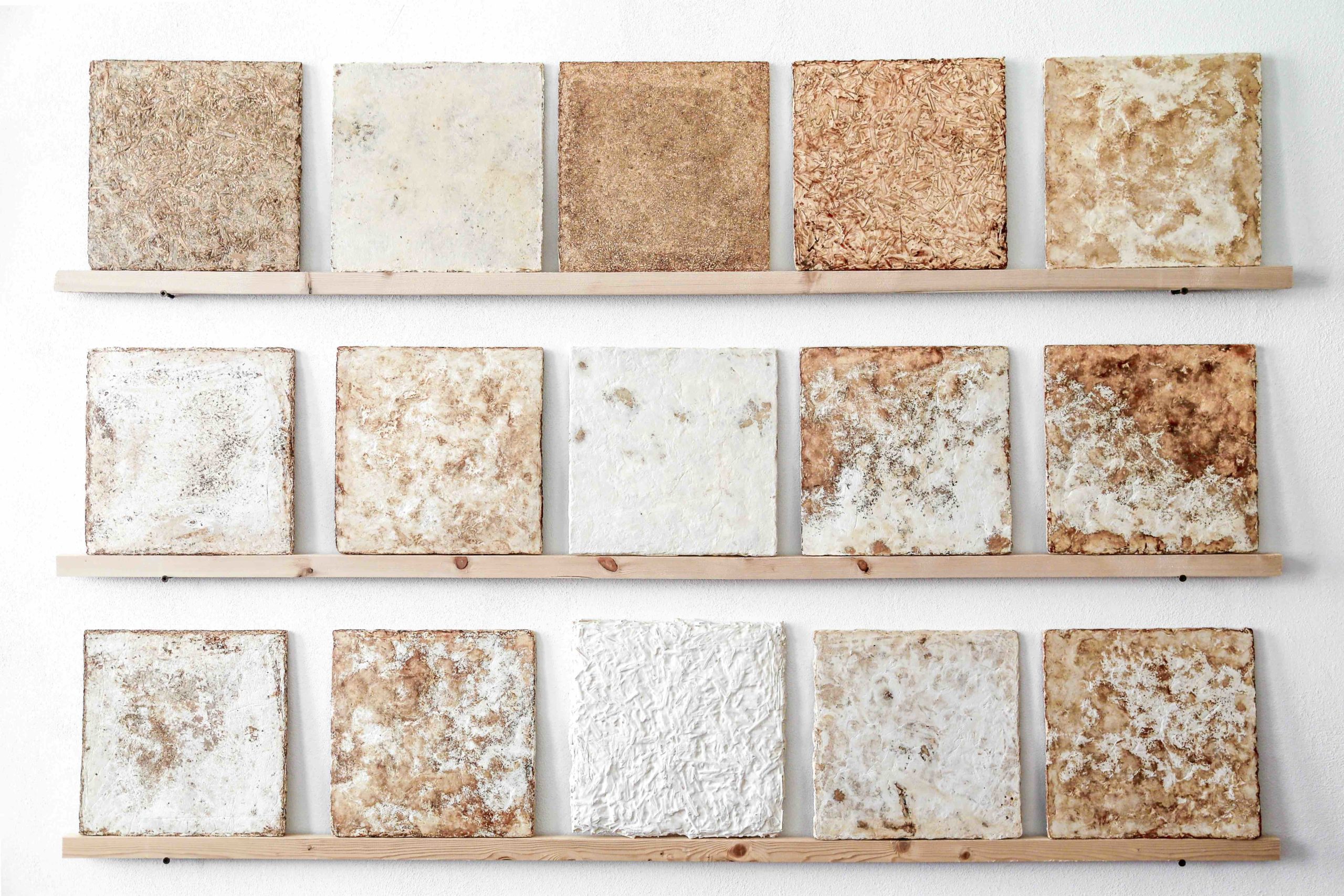
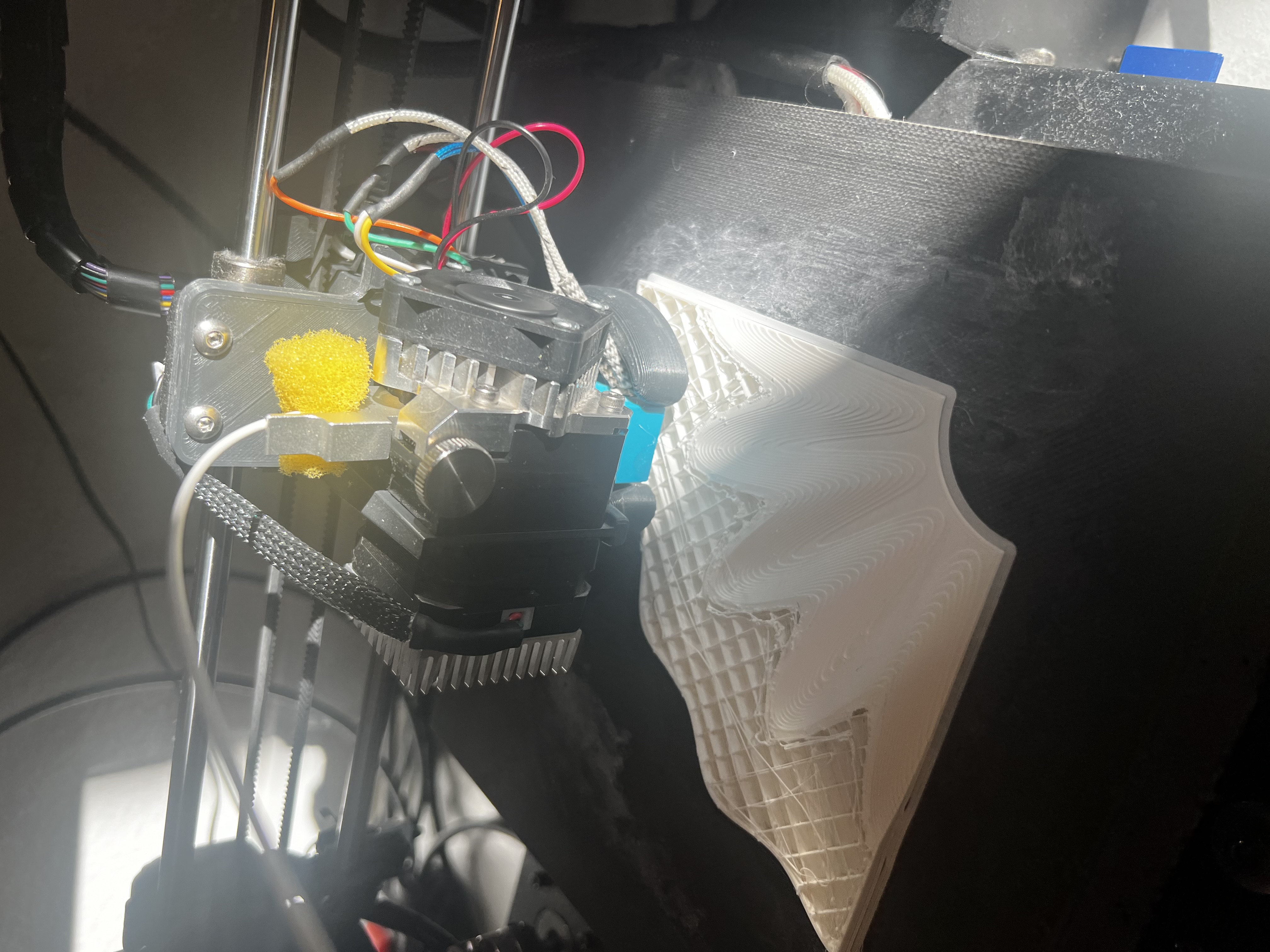
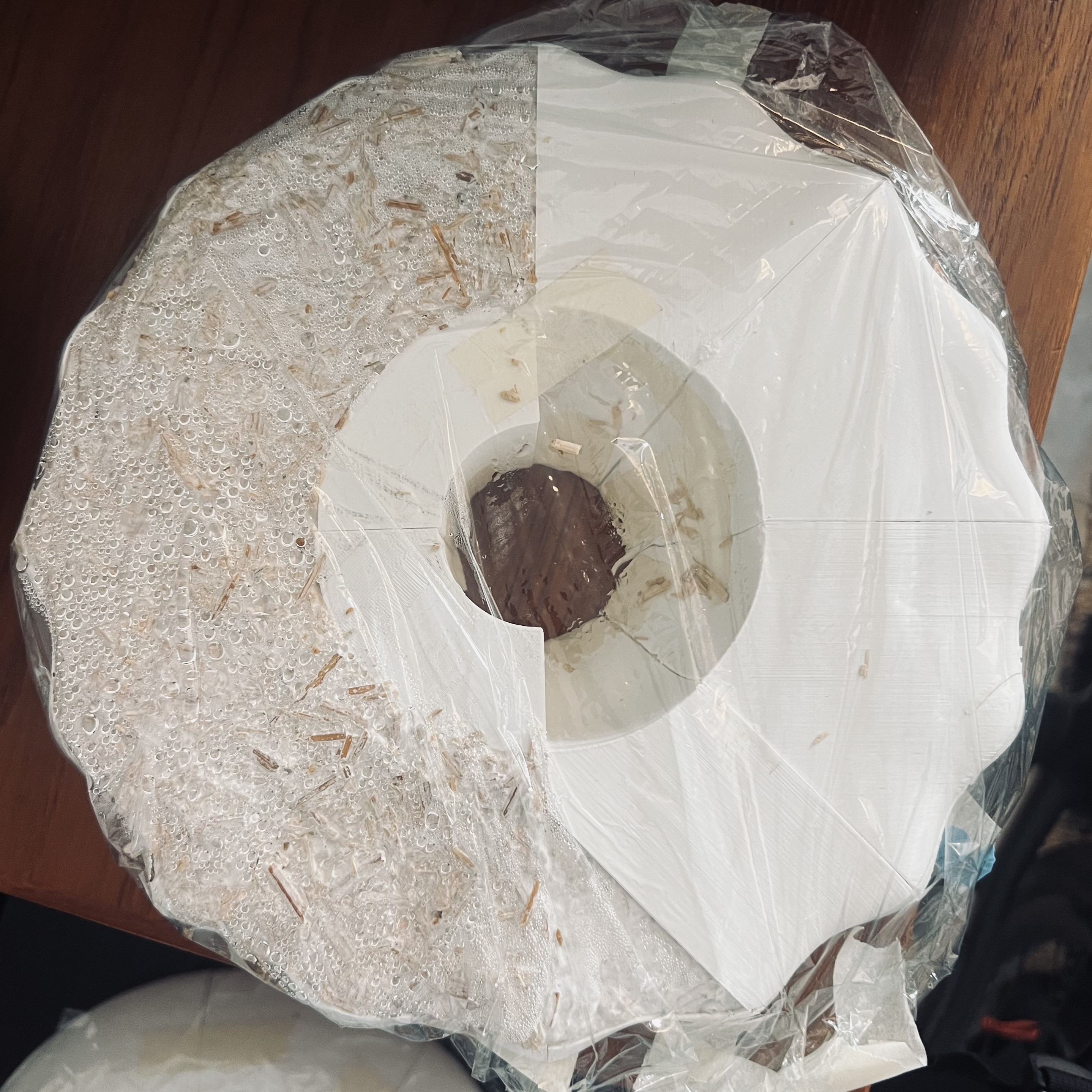
How to control growth shape, density, and consistency of a living material?
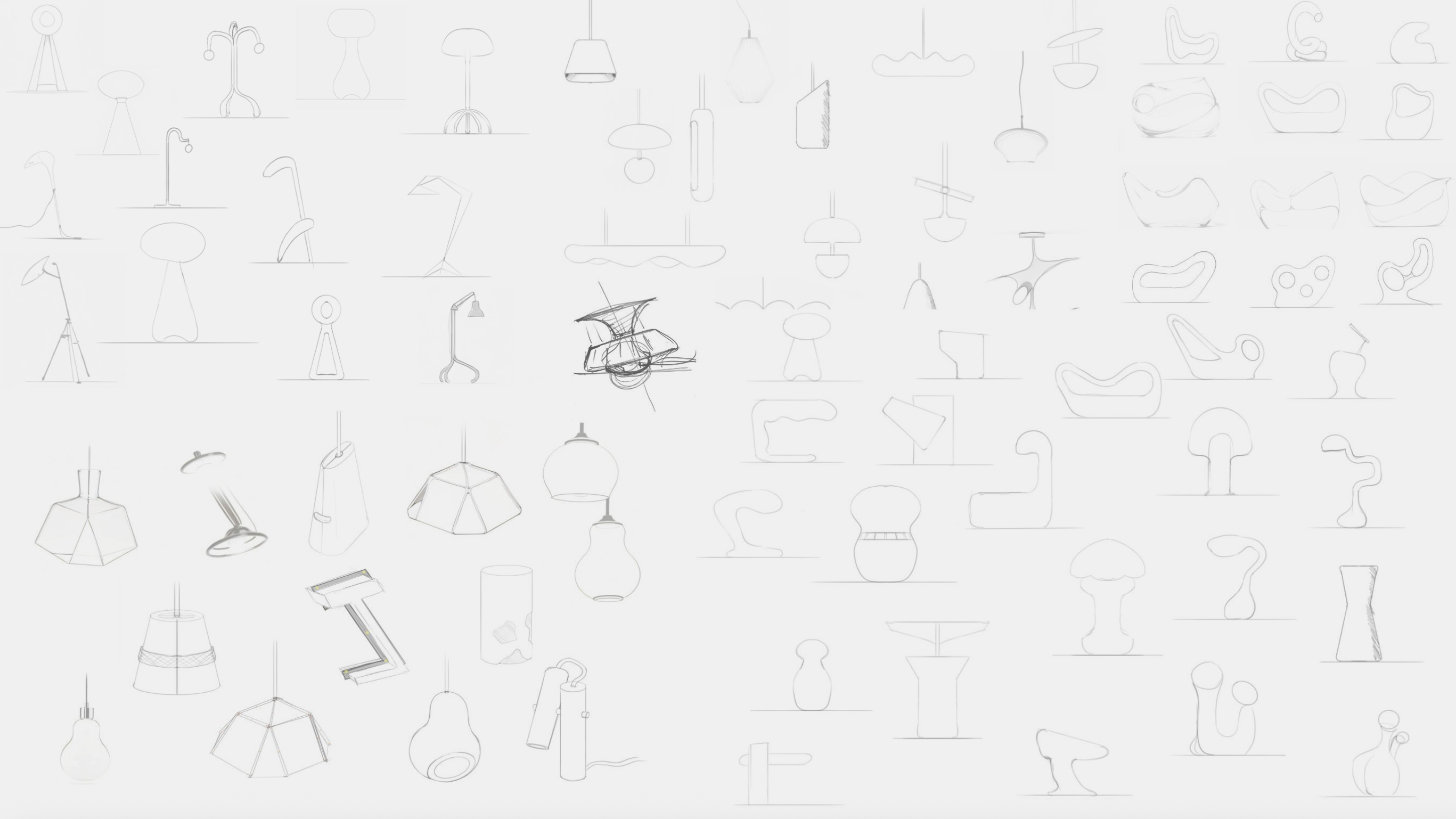
SKETCHES & Testing
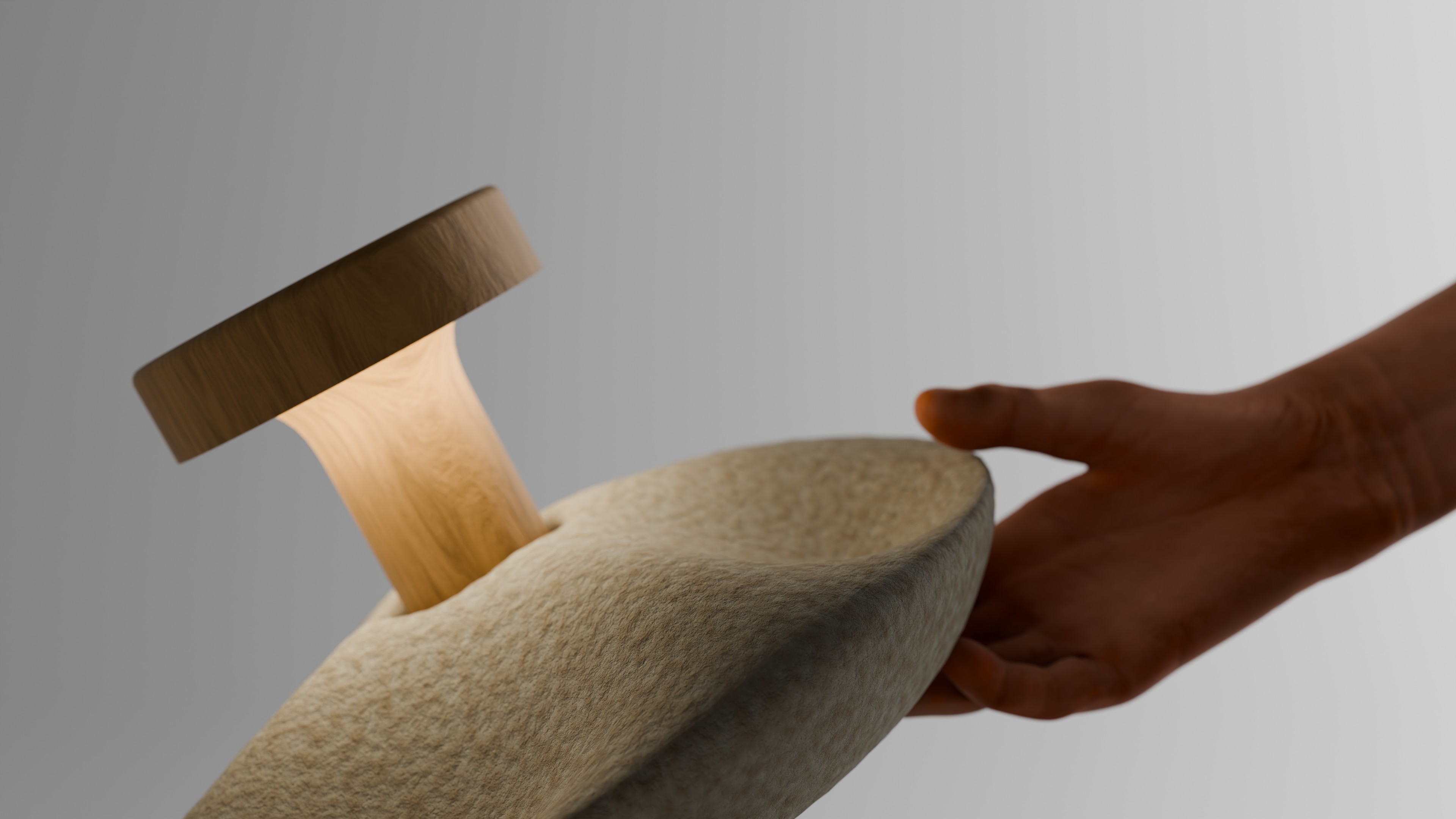
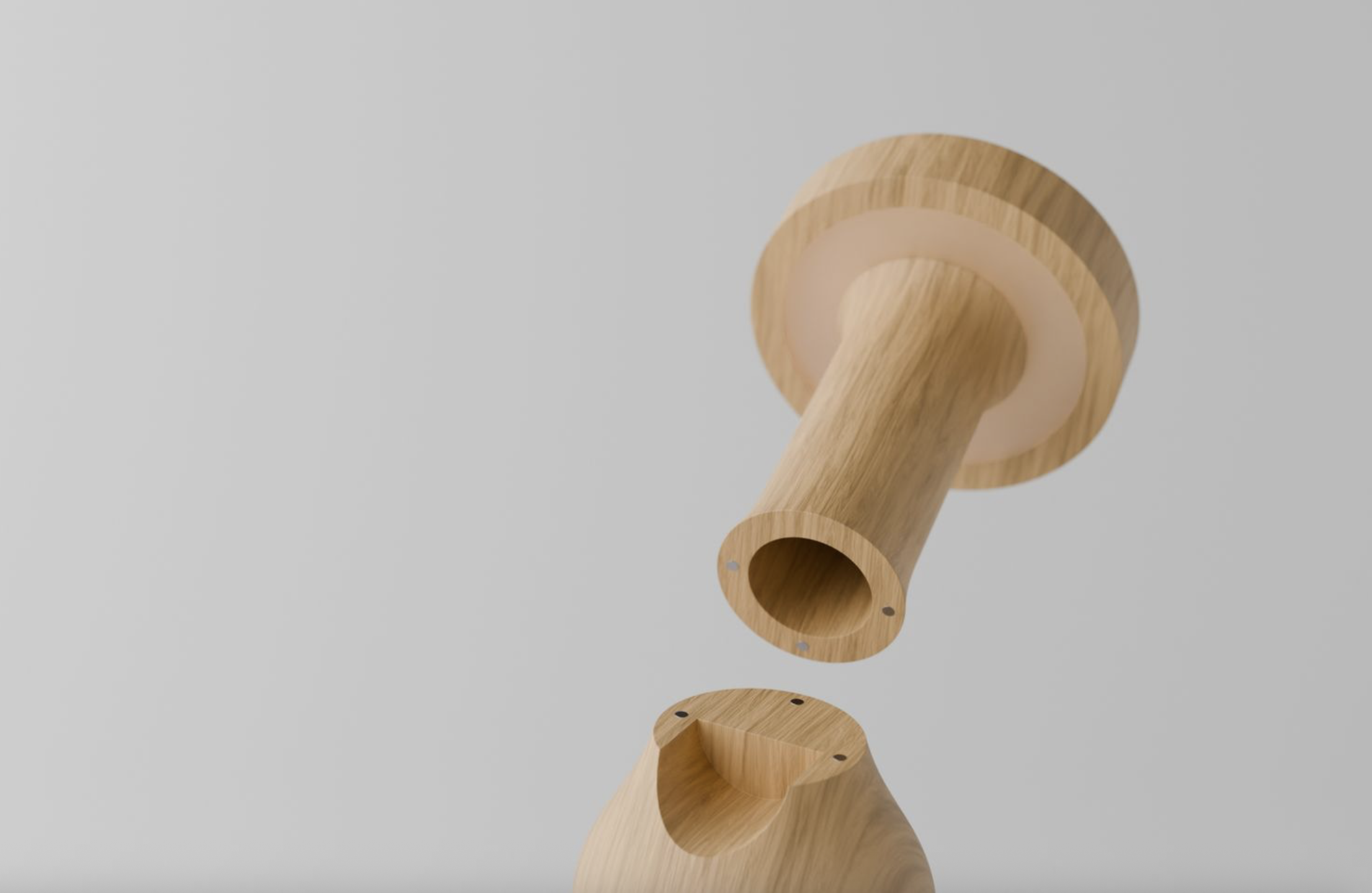
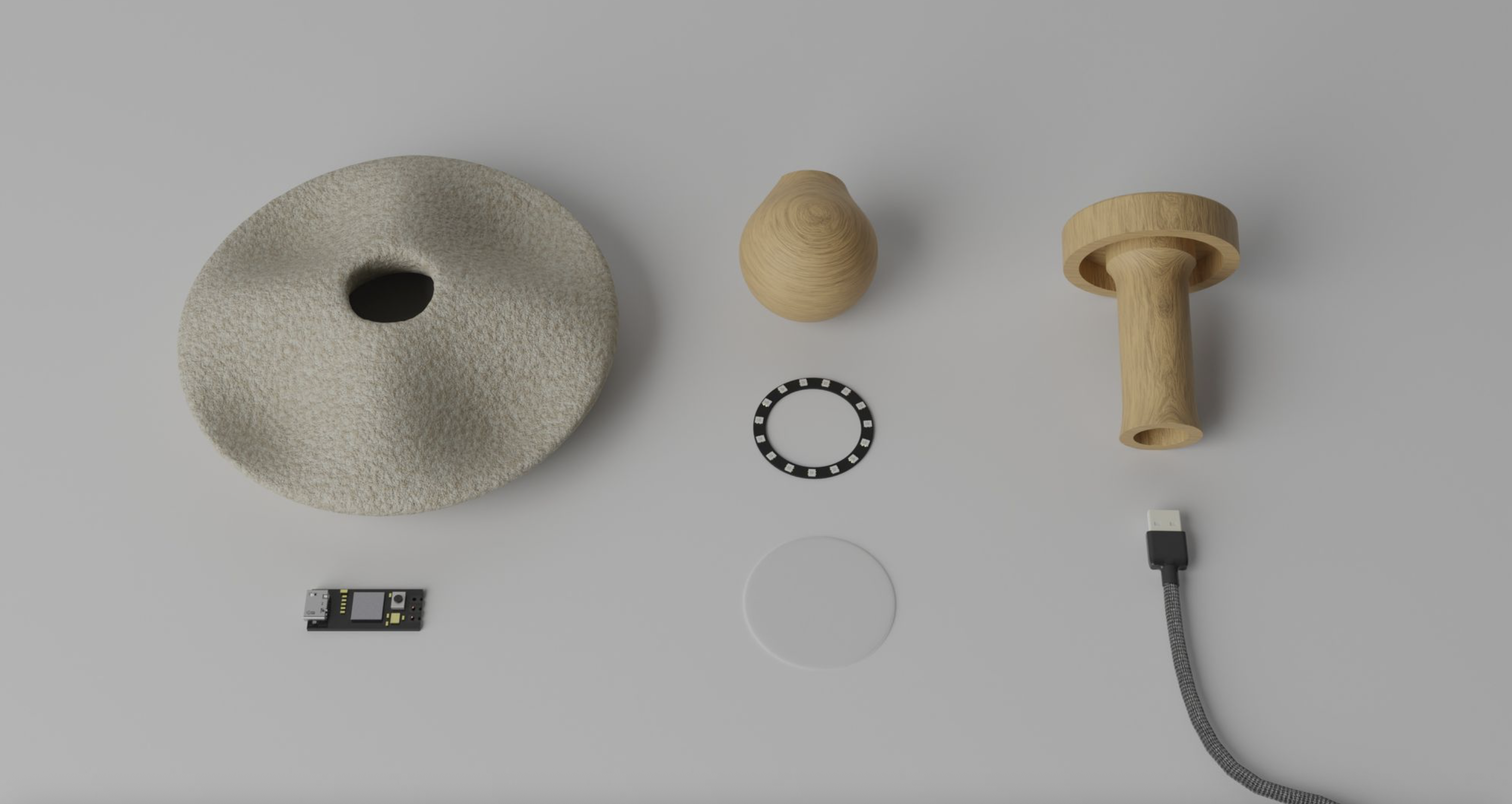
The light fixture is built around a spherical base, enabling it to be rotated freely. A wooden core structure allows the height of the mycelium element to be adjusted, which directly influences the tilt and direction of the light.
An LED ring positioned at the top emits a warm glow onto the organic surface, enhancing the texture and creating a soft, ambient effect.
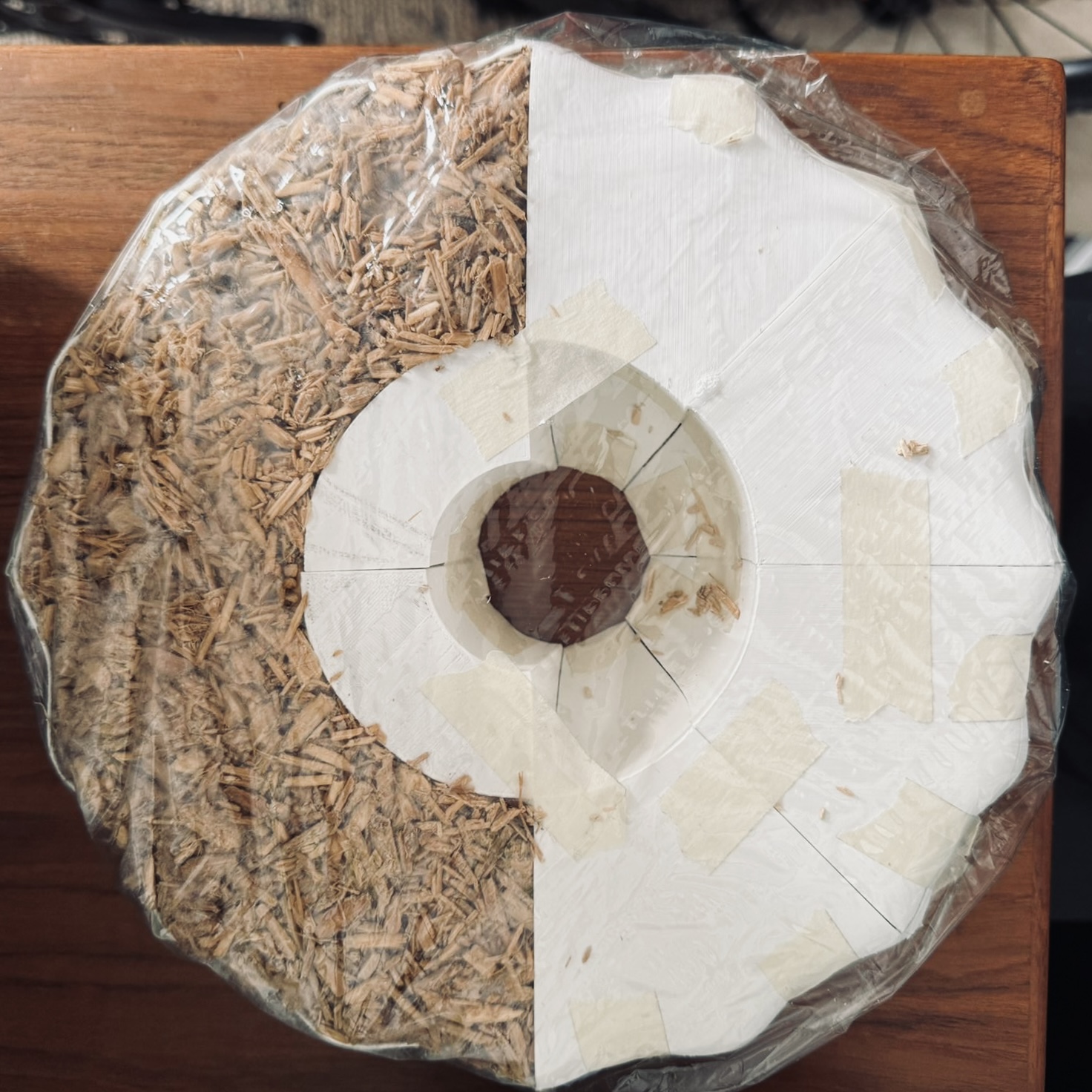
Cultivating Myzelium - Day 1
Cultivating Myzelium - Day 7
Through this project, we worked with natural materials in a hands-on way, experimenting with growth, form, and constraints. It became less about designing a static product and more about shaping a relationship between humans and technology and organic matter. It was largely about researching and experimenting with new materials and exploring the possibilities that arise from them.
Questions I Asked During or After the Process
How does light change the way we perceive texture and atmosphere?
How much imperfection should remain visible in a designed object?
How can sustainability become experiential instead of purely functional?
What I Would Continue Working On
Explore alternative mycelium growth techniques and molds
Investigate biodegradable or fully circular electronic components
summary
Atmospheric light object using mycelium as a core material
Focus on interaction between organic material and light
Adjustable system influencing tilt and direction of illumination
Combination of natural growth and technical components
Exploration of sustainability through material-driven design